
There is a kana-zoshi titled Murasaki no Hitomoto (1682), written by the early Edo-period waka poet Toda Mosui, which contains an account of the Asakusa Sanja Matsuri:
“The festival of the Sanja Gongen by the followers and local adherents of Kannon-ji takes place on the 18th day of the third month. This, too, is held every other year. The festival of Sanja Gongen originated in the first year of Showa (1312: 正和元年) during the reign of Emperor Hanazono, in accordance with an oracle.
To the east of the main hall’s shrine stands Sanja Gongen. When the image of Kannon was pulled up in a fishing net, the dwellings of the two fishermen, Hironoma no Hamanari and Takenari (檜の熊の浜成・竹成), were converted into a temple. Together with the fisherman named Atai Nakatomo (直中和, Haji no Nakatomo土師中和), the three were enshrined as Gongen and came to be known as the Three Guardians of the Law. The monks residing outside the main hall—the Sendo, Saido, and Tsuneoto—are descendants of those three shrines. Because they married and passed down their lineage, the festival on the 18th day of the third month is dedicated to the deities of these three shrines. Exiting through the eastern Zuijinmon Gate (随身門. It was built by the 3rd Tokugawa Shogun Iemitsu in 1649, some decades before Toda Mosui wrote this essay), one arrives before the First Gongen. The First Gongen refers to the Akan-do. Legend has it that long ago, when Kannon rose from the sea, a pheasant came from the fields and covered the deity’s body with its wings to protect it from the rain and dew. For this reason, devout believers of this Kannon do not eat pheasant. Local residents do not allow anyone to eat pheasant inside their homes.
From there, the Sanja Gongen is carried out to sea on a boat from Komagata-do, landed at the wharf near Asakusa Mitsuke, and returned to the main shrine along the main street.”

Well now. This is truly remarkable.
A long time ago, before the Kanto region was fully developed by Tokugawa family who entered Edo by Hideyoshi’s appointment, Asakusa was an island and this area was covered in rivers and marshes (see old maps), making boat festivals (funa-matsuri) a common practice. I imagine the festival back then cruised along the Sumida River, travelling from Asakusa to Torigoe, Ushijima, and back.
Apparently, by Toda Mosui’s time, Asakusa Shrine was already housed in a separate building from the main hall—that is, Senso-ji—and located where it stands today. Furthermore, the “Zuijinmon” mentioned here seems to refer to what is now known as Nitenmon Gate. After leaving Asakusa Shrine, one would immediately turn east and exit through Zuijinmon. There was likely a structure called “Akan-do (the First Gongen)” in this vicinity. From there, the procession would head south down from Umamichi street to Hanakawado street until reaching Komagata-do Hall. That building still stands today, just north of the western end of Komagata Bridge. From this spot, the portable shrines (mikoshi) were loaded onto boats to travel down the Sumida River, landing at the wharf near Asakusa Mitsuke (Asakusa Gomon)—likely near Yanagibashi, where the Kanda River joins the Sumida River (possibly Kuramae or Asakusa Okura). From there, they would return to the main shrine via the main street, passing through Torigoe (Kuramae) and Komagata-do once again.
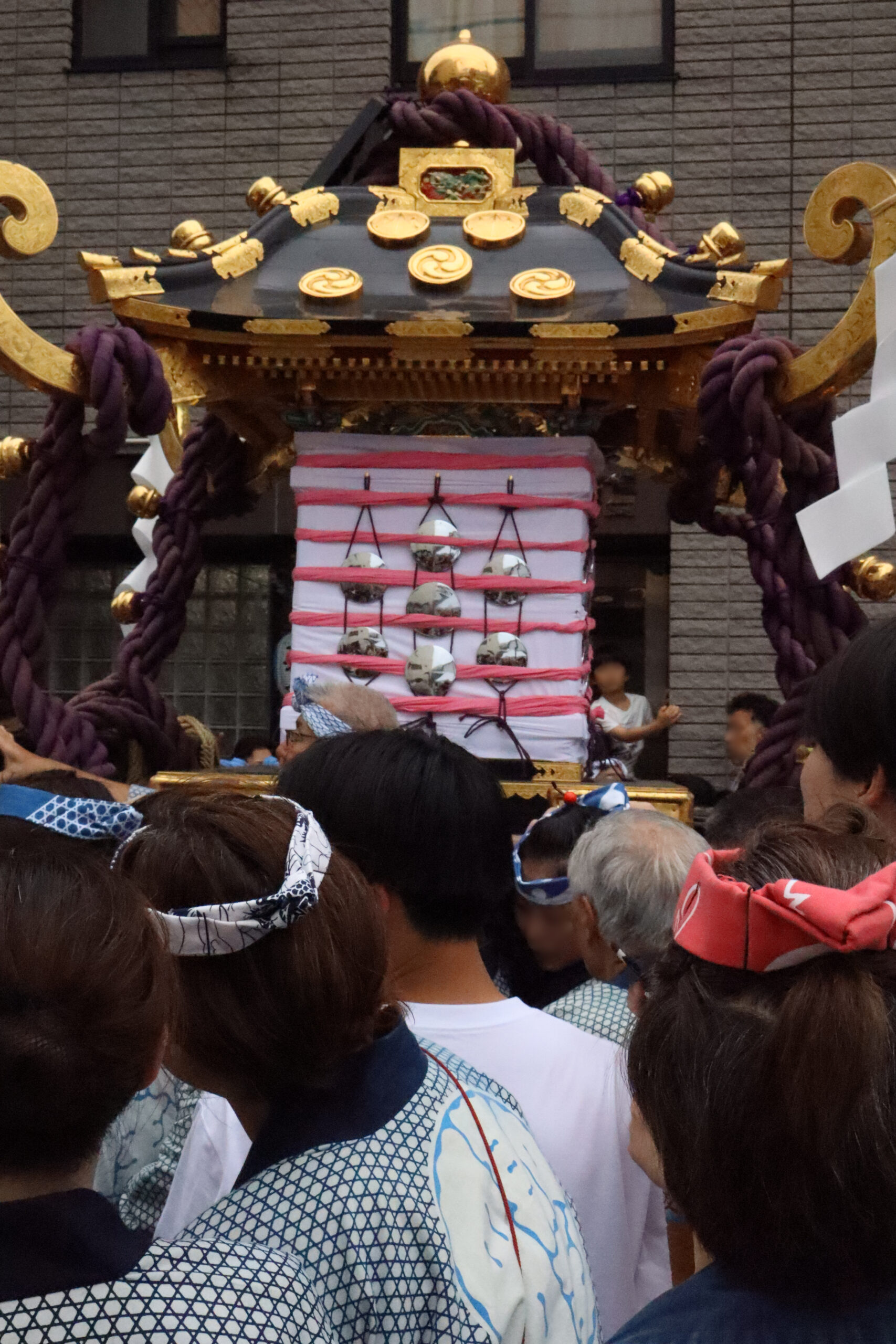
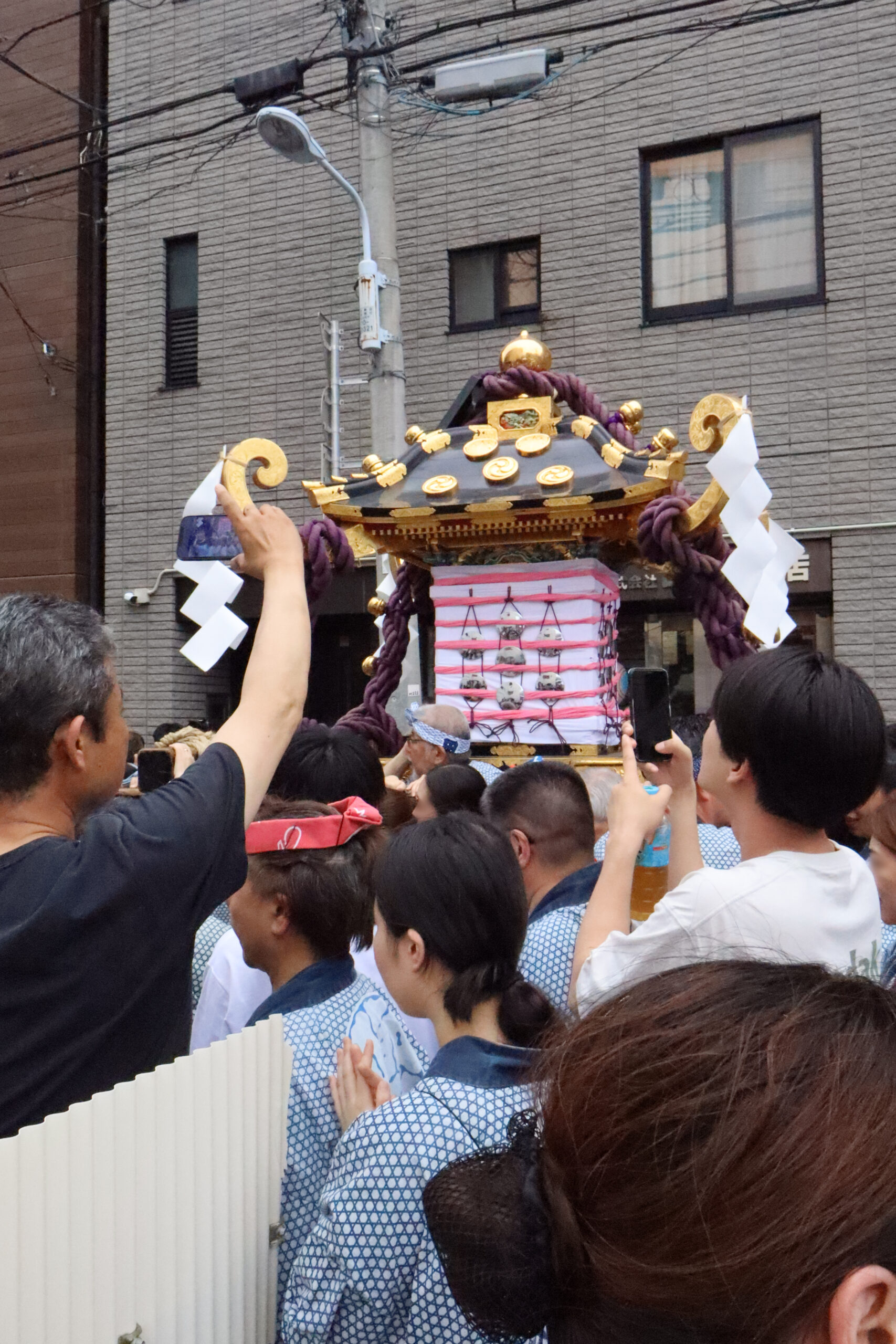
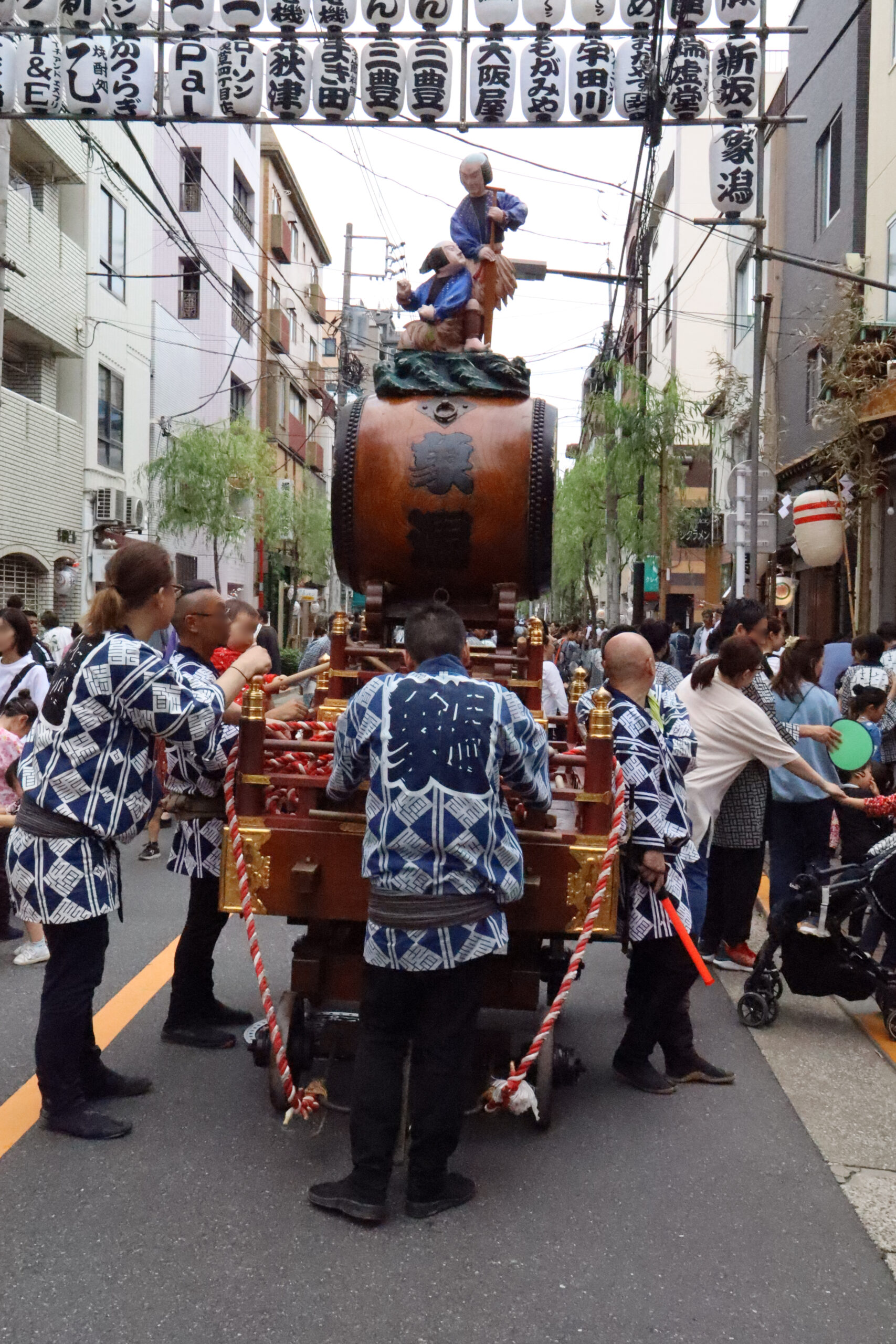
This is completely different from today’s Sanja Matsuri.
In the early Edo period, the area stretching from Asakusa to Yoshiwara was likely mostly paddy fields and marshes, with very few inhabitants. Yoshiwara itself relocated to its present site—then known as Ryusenji Village—in 1657.
However, a considerable number of people seem to have settled along the road leading from the Otemon Gate of Edo Castle to Asakusa as far back as the Late Hojo period. Because Asakusa’s primary industries were fishing and water transport along the Sumida River, the townspeople who made their living from these trades were the main participants of the Sanja Gongen festival. Since the Asakusa Kannon was said to have been hauled up from the river in a fishing net, the funa-togyo (river procession) served as the festival’s main event. That was the original form of the Sanja Matsuri.
Though the original purpose of auxiliary structures like Akan-do and Komagata-do at Senso-ji has been lost to time, Senso-ji once maintained an intimate connection with the Sumida River. These facilities were crucial for connecting the temple complex with the waterway. While the text notes that current location of Senso-ji was originally the site of the Hinokuma family’s private residence, it was likely the most developed area around—and situated on high ground least susceptible to flood damage.
At Kashima Shrine, an Imperial Envoy (chokushi) is dispatched every 12 years—in the Year of the Horse—for the Shikinen Taisai Mifune Matsuri (Boat Festival). At Katori Shrine, they also hold the Shikinen Shinko-sai, a festival featuring boats that reenacts the eastern expedition of the deity Futsunushi no Okami. It is even said that Omiya’s Hikawa Shrine once held a boat festival in which the marsh itself was worshipped as the sacred object (goshintai). Whether or not portable shrines (mikoshi) were loaded onto boats, the sacred processions (senko), shrine transfers (sengu), and eastern expeditions (tosei) in the Kanto region must have originally been grand-scale operations involving military forces transported on ships. Over time, these events likely transformed into recreational activities for local parishioners (ujiko) and eventually catered to tourism.
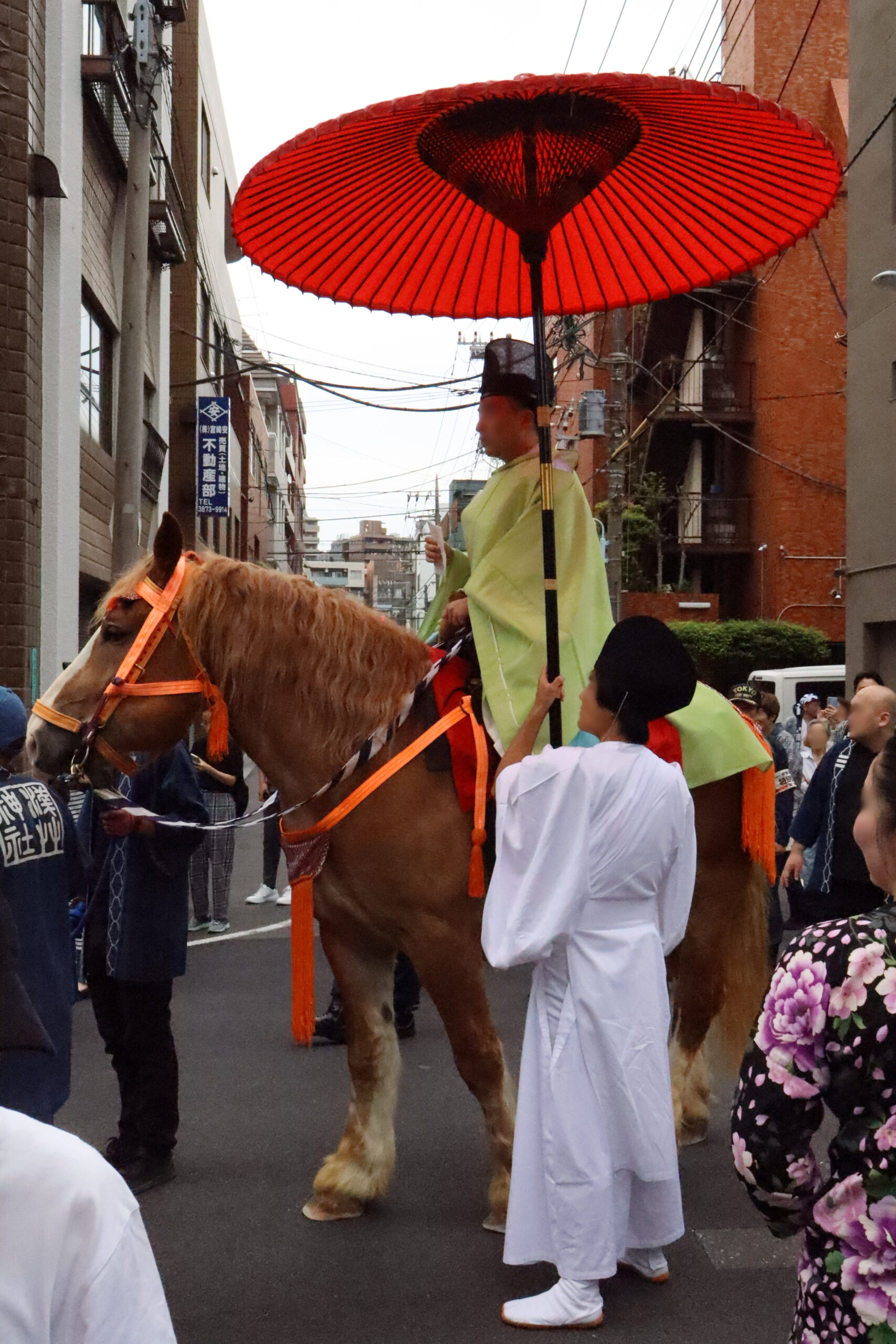
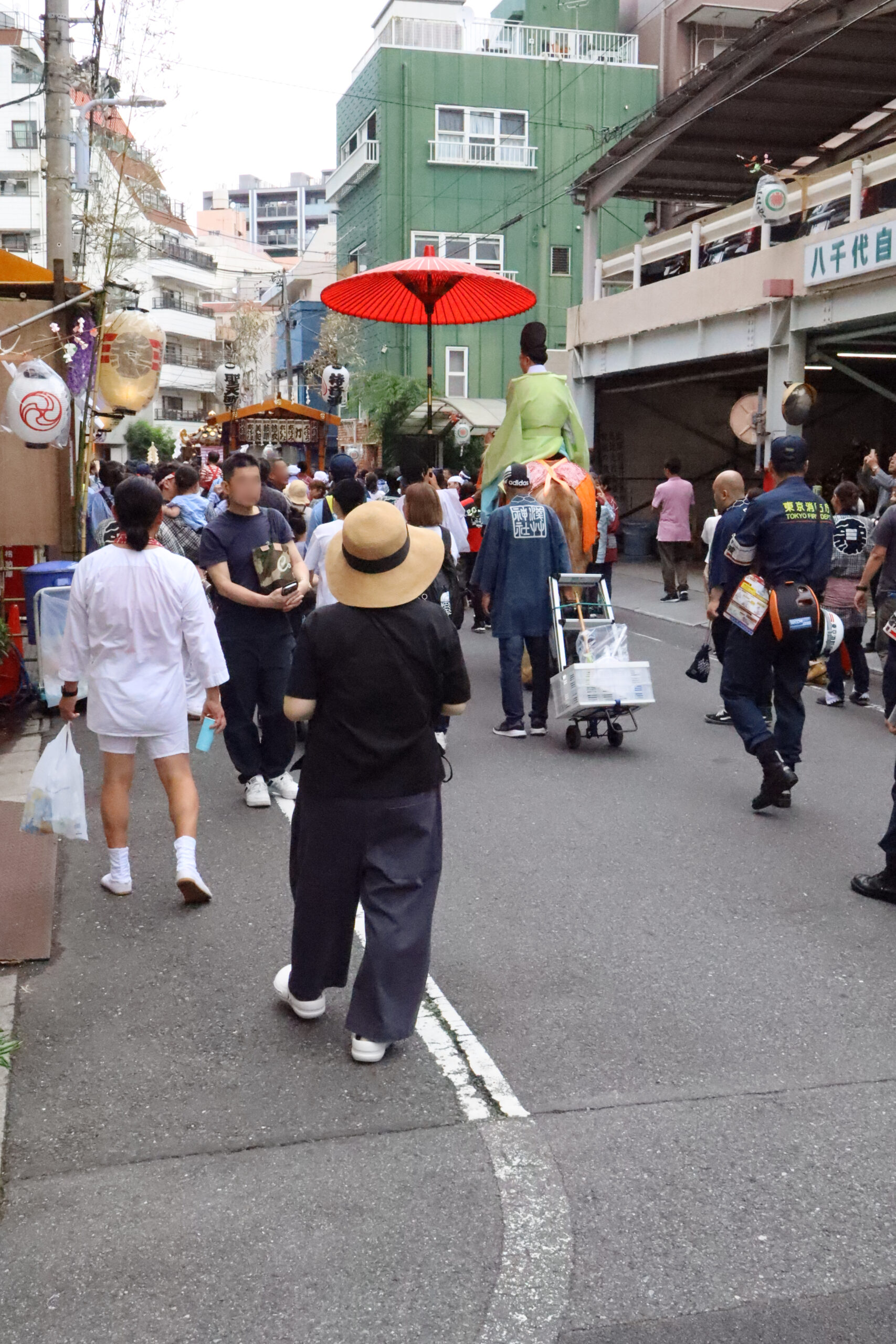
Since an Imperial Envoy would hardly visit the Asakusa Sanja Matsuri, the horses seen in the festival today are likely meant to recreate the atmosphere and spectacle of an Imperial Envoy’s procession.