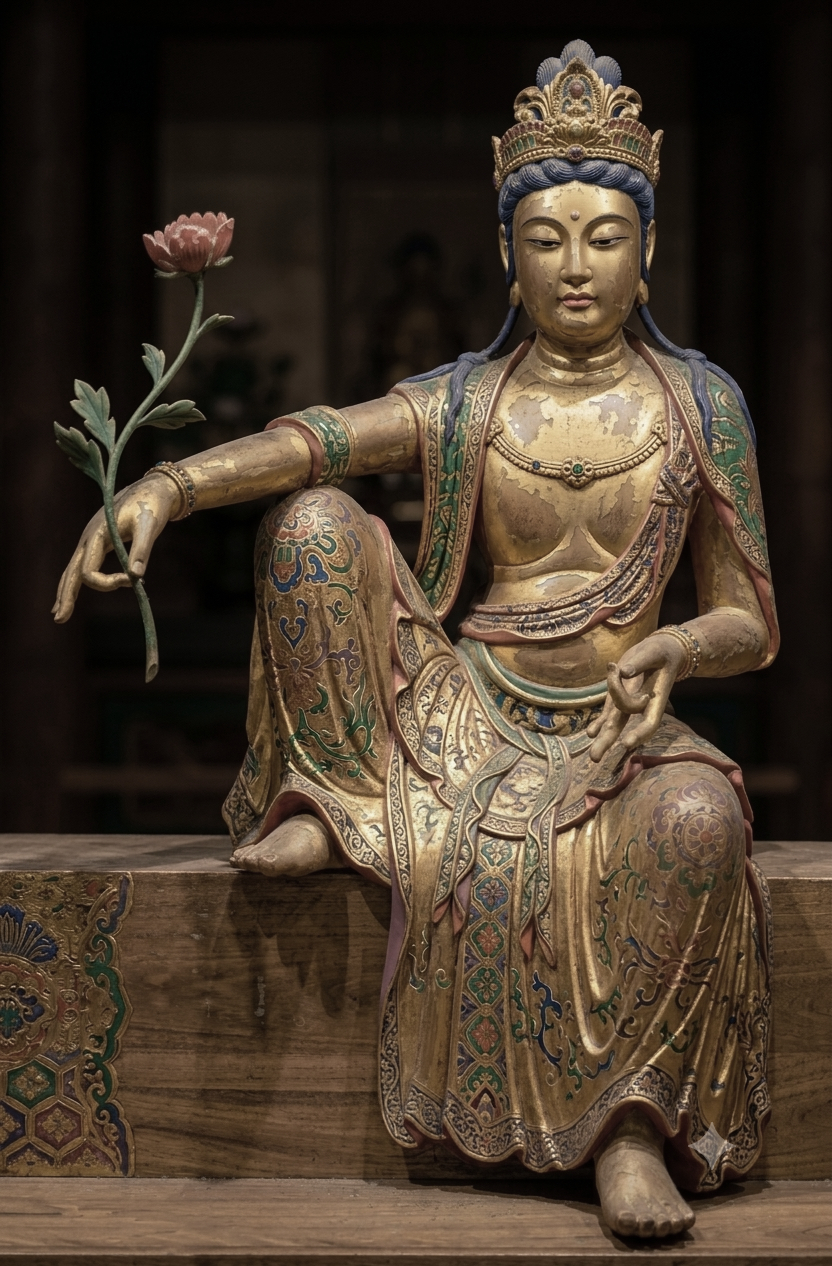
Nishikyogoku Kiyomasa. A man with a name straight out of a manga—that’s my client.
A “one-day business trip to Kyoto for an appraisal”—it sounds like a grand assignment, but in reality, I’m just a humble second-hand bookstore owner who doubles as an adjunct university lecturer. Given my line of work, buying and appraising old books is routine. Whenever I hear that an old family is clearing out their library, I dutifully travel anywhere in Japan.
This particular request had originally come to my former supervisor, Professor Makinouchi. The reason he passed it off to me was simple: he knew from the start there was no real money in it. Before accepting, I called Mr. Nishikyogoku to confirm the details.
“My travel expenses alone will come to 50,000 yen,” I said.
“What’s the breakdown of those travel expenses?”
“…Round-trip train fare between Tokyo and Kyoto, Shinkansen express fees, meals, supplies, and other miscellaneous costs.”
“Then let’s go with 50,000 yen.”
“Wait… Excuse me, but on top of travel expenses, I also charge an appraisal fee and an honorarium,” I replied, holding back my irritation.
On the other end of the line, Nishikyogoku raised his voice.
“In that case, I’ll just hire someone local who doesn’t require travel expenses.”
I should have asked for a much higher price from the beginning.
I should have turned him down right then and there. But greed got the better of me. What if that so-called Meigetsuki—that supposedly unrecorded fragment in Fujiwara no Teika’s own handwriting—turned out to be the real deal? When it comes to a figure like Teika, even a fragment of a single phrase is a major discovery. It might lead to new insights, allowing me to churn out paper after paper. My career as a scholar would be set. Maybe an academic post would open up somewhere—at my age I’d hate to settle for an assistant professorship, but I might at least land an associate professor position. That was the calculation I made.
“Good grief. Fine, I’ll take the job. As a special exception, 50,000 yen all-inclusive. But in exchange, if any discoveries are made, I get to present them to the academic society first. No leaking this to anyone else, understood?”
“Yes, that’s perfectly fine. I look forward to working with you, Mr. Enomoto.”
The Tokaido Shinkansen. When you’ve made the round trip as many times as I have, even the “Spotting Mount Fuji” milestone loses its charm. For a while, I used to take photos of power poles out the window with my phone camera just because it was neat how they came out tilted at high speeds. But I got tired of that too. Now I have nothing left to do but aimlessly scroll through my phone. Am I not reading a book, you ask? A second-hand bookstore owner like me? I read to death on a daily basis, thank you very much…
The address specified by the client was “Kudaru, Kadeno-koji, Takeyabu-cho.” Sounds like a miserable place that would make you break out in hives.
Since it was quite far from the nearest station and we were meeting first thing in the morning, I took a taxi straight from Kyoto Station after giving the driver the address. He had called it the “Nishikyogoku Residence,” so I expected a grand estate, but it turned out to be an ordinary townhouse squeezed into a cluttered, everyday neighborhood, with a narrow storefront. When I pressed the intercom chime, a man stepped out from the entrance. He looked exactly like the president of a small-to-medium business—the kind of guy you see at lunchtime in a city’s office district, walking down the middle of the street with a squad of subordinates in tow. This had to be the client, Mr. Kiyomasa Nishikyogoku himself.
“Mr. Nishikyogoku, I presume? Nice to meet you.” We exchanged business cards first.
“Please, come on in.”
“Excuse me.”
Neither of us wasted words. Strictly business. Gentlemanly. The battle of wits had already begun.
It certainly wasn’t anything historic. Passing through the long, narrow structure—a classic “eel’s nest” layout with that faint, sharp stench typical of old wooden buildings, a mix of moldy timber and sour drainage—I emerged into a cozy courtyard garden flanked by the walls of neighboring houses. It featured a mini artificial hill with Japanese maples, and two or three brocade koi swimming in a small pond. Ah, I wish I were in a position where I could spend my days feeding pond koi.
At the far end of the garden stood a storehouse, blocking the path as if to mark the end of the line. It looked old enough, but at best, it was built in the Meiji era. The thick, plaster-coated doors were already propped open, and the items for appraisal were set out on a table right in the center of the room.
“Well then, let’s have a look, shall we?”
Pro forma, I pulled a pair of white silk gloves out of my inside pocket and put them on—a handy little trick pawnbrokers often use.
Inside a paulownia wood box lay five or six volumes of high-quality Japanese paper, thread-bound with thin black-dyed string. While the covers and edges were slightly yellowed with age, they weren’t particularly worn. No major stains, wormholes, creases, or damage. Of course, even Edo-period items can be found in condition this good. There was no doubt they were pre-war, but at earliest, Taisho. During the Taisho and early Showa eras—when the embers of the Russo-Japanese War had faded and the sparks of the Sino-Japanese conflict had yet to smolder—society was relatively calm, and higher education for young men and women was thriving. Students and schoolgirls back then loved creating and treasuring neatly transcribed, beautifully bound books on Japanese paper just like these. The handwriting, too, had a vaguely feminine quality to it. A faint trace of incense lingered on the pages, likely because they had been aired out and maintained periodically until quite recently.
Well, even at the absolute earliest, this only goes back to the late Edo period, I thought. Flipping through the pages, I saw a hodgepodge of Classical Chinese, Japanese prose, and waka poetry.
“So, what do you think, Mr. Godo?”
I run a second-hand bookstore called Godo Shoho in a back alley of Kanda-Jinbocho under the name Enomoto Godo. “Godo” is, of course, a pen name—a little bluff I use for business—whereas at the university where I teach as an adjunct lecturer, I go by my legal name.
I couldn’t let him see right through me, so I intentionally knitted my brows. “The Classical Chinese parts do indeed resemble the Meigetsuki. So, yes, it is a manuscript copy of the Meigetsuki.”
“Right? Fujiwara no Teika’s. The early Kamakura period poet, one of the compilers of the Shin Kokin Wakashu. The diary written by the creator of the Hyakunin Isshu.”
Teika was the subject of my graduation thesis. I don’t need you to lecture me on him.
“This came out of this storehouse, correct?”
“Yes.”
“Be that as it may, whether a manuscript copy was written in the Kamakura period, the Muromachi period, or the Heisei period, a copy is still just a copy. What matters is when it was written.”
“I don’t need you telling me something so obvious.”
“Furthermore, as was the custom for court nobles of that era, the Meigetsuki was written in Classical Chinese. It wasn’t a jumble of waka poetry and Japanese prose like this.”
“Even court nobles might write a diary in Japanese prose once in a while, couldn’t they? Ki no Tsurayuki wrote the Tosa Diary, after all.”
“Well…” I started to explain that that was completely beside the point, but gave up because it felt like too much effort.
The Classical Chinese sections were written in a neat block script, while the Japanese prose was set down in a fluid, running cursive. Once again, it was reminiscent of the calligraphy textbooks schoolgirls used to study before the war. Ah, the good old days.
“Professor,” Nishikyogoku said. “They say there are many gaps in the timeline of the Meigetsuki, don’t they? Truth be told, I was thinking this might actually be the complete, original version of the Meigetsuki.”
Regarding the Meigetsuki, the so-called “autograph manuscript” preserved by the Reizei family—direct descendants of Teika—consists of 56 handscrolls. Even that has significant gaps, missing entries from Teika’s early learning years when he was around eighteen or nineteen. What remains are scattered records starting from around his thirtieth year—when Yoritomo died, Emperor Go-Shirakawa passed away, and the reign of Emperor Go-Toba began—up until his retirement into the priesthood after the Jokyu War. No diary entries have been confirmed from after his retirement until his death at age eighty. In other words, Fujiwara no Teika merely kept this diary as an official record of his duties as a court noble. Yes, it was just a daily log, with fascinating entries intermingled only on rare occasions. While poem jotting wasn’t completely absent, it was fundamentally different from the personal essays of Sei Shonagon—it was hardly that sort of elegant, romantic work.
There are countless paper sheets circulating in the world said to have been cut from the original manuscripts, but most are doubtful to have been written by Teika at all. As for manuscript copies, there are even more. The idea that a complete, original set of all volumes would just casually pop up here was preposterous.
“As far as I can tell, the waka poems recorded here were not composed by Teika,” I said.
“Surely there must be songs of his that remain unknown.”
“Well, I certainly haven’t memorized every single one of Teika’s poems. However, apart from the Meigetsuki, Teika left behind a personal poetry collection called the Shui Gusō. Furthermore, the Shui Gusō Zaigai was compiled after his death by his family and disciples, collecting personal poems up to his final years that had been omitted from the main collection. Excluding those, there are virtually no unknown poems by Teika. Yes, at least when it comes to Teika specifically. Other poets may be a different story, but Teika was a truly enviable man. Even after his death, his work escaped dispersal and was passed down to posterity almost perfectly intact. Motoori Norinaga is perhaps the only other person so blessed. Now, based on my cursory look, don’t you find it odd, Mr. Nishikyogoku, that none of these poems overlap with the Shui Gusō, and that the poetic style and preferences are completely different from Teika’s?”
He refused to back down. “Couldn’t it be said like this? Teika first wrote this diary. Then, he published the presentable poems in his personal collection and extracted what could be kept as a court noble’s diary—which became the Meigetsuki passed down today. Meanwhile, this original diary was Teika’s secret manuscript, containing waka and anecdotes too sensitive for the public.”
“I think that’s quite a stretch,” I said, feeling a headache coming on.
“So, Professor, are you saying this is a forgery?”
“No, I don’t believe it was written with the intent to deceive. Many manuscript copies of the Meigetsuki attempt to fake Teika’s hand by mimicking his unique style—known as the ‘Teika style’—which is… how should I put it… rather plump and rounded. They even artificially age the paper. But the handwriting in these books is slender and crisp. It feels like the meticulous transcription of a very careful individual. In all likelihood, one of your ancestors who was fond of Teika copied the Meigetsuki, and alongside it, wrote their own poems and diary entries. It’s more like a study notebook, really.
Perhaps it was a cherished possession of the former lady of the house. In fact, she might have been the one who wrote it herself. Was it your wife who passed away recently?”
“No. The wife of the head of the household passed away last year, and he followed her shortly after, dying just the other day.”
“I see.” Well, that pretty much settles it, I thought.
“Is it worth anything?”
I was momentarily struck dumb. I can’t let him gain the upper hand.
“Since it came from the storehouse of an old Kyoto family, we can’t entirely rule out the possibility that it was written by an Edo-period court noble. If, by some chance, this turns out to be a diary kept by a reasonably well-known scholar or literary figure of that time, I wouldn’t say it’s completely devoid of academic value. However, the probability that this is the ‘complete edition’ or an ‘unrecorded fragment’ of Teika’s diary is next to zero. I won’t say it’s absolutely impossible, though. If you’d like a more thorough appraisal, I could borrow it for a while and look into it.”
Kiyomasa Nishikyogoku still seemed half-skeptical.
“Very well, Professor. I’ll lend them to you. Please examine them carefully and let me know if you make any new discoveries.”
“Yes. I’ll have Professor Makinouchi take a look as well, and thoroughly collate it against other manuscript copies.”
I double-bagged the books in Ziploc bags so they wouldn’t absorb moisture by any chance, and packed them into my bag.
“Was there anything else of note in the storehouse?”
At that moment, I could have sworn Nishikyogoku’s eyes darted away ever so slightly.
“No, nothing in particular. Just a few worthless hanging scrolls and tea bowls.”
“Shall I take a look at them while I’m here? No extra charge, of course. Just out of pure curiosity—nothing commercial about it.”
“If you insist. Very well.”
The items he showed me were nothing but Meiji or Taisho folk art and poor-quality Western-bound books. They were indeed worthless. Here I was hoping to find at least some block-printed books (yomihon) published in the Kyoto-Osaka region. Now it was my turn to feel disappointed. This pseudo-ancient document I had just accepted was almost certainly from the same recent era. There was nothing truly ancient here.
It had been a wild goose chase. There hadn’t even been a need to come all this way. It would have been enough to have the manuscript mailed to me, or to have him snap photos of the cover and a few pages inside to send over.
It seemed there was no one else in the house besides myself, the guest, and Mr. Nishikyogoku. The place was dead silent, and since he didn’t seem inclined to serve tea, I decided to take my leave.
Saving on taxi fare, I transferred through local trains and headed toward Professor Makinouchi’s lab at K University. Kyoto’s subway system had expanded quite a bit lately, making it much more convenient—especially since the Tozai Line was built. Back when I was a student, the Karasuma Line was the only subway line around. That was twenty years ago now. In those days, I rode my bicycle everywhere. As long as I had a bike, I could get pretty much anywhere I needed to go. After a year or so, I had grown tired of sightseeing in Kyoto and just wanted to escape this cramped basin of a city as soon as possible. If I had been a little more patient back then and tried to stay in this land, who knows where I would be today?
While many of the campus buildings had been rebuilt, the main building had only received a fresh exterior; inside, it remained exactly as it used to be. The inside of the front clock tower was like a labyrinth, completely lacking an elevator. Tucked away in a corner of the sixth floor after a climb up the stairs sat Professor Makinouchi’s lab. That he hadn’t moved to the new research building was less because he was being treated as damaged goods on campus, and more because he had personally requested such an inconvenient, antique, Imperial Crown-style hideaway.
Iron and concrete. As usual, the heavy iron door was propped open. Walking through the room for students, you passed a small partition to reach the assistant’s room, and beyond that was Professor Makinouchi’s private study. The walls on both sides were completely buried under bookshelves, and the desk facing the wall sat like a hollowed-out alcove. The extension phone was still an old black rotary phone. At the far end of the long, narrow room, a cast-iron radiator was installed, and through the window above it, you could look out at a chilly courtyard that looked as though you had strayed into a street corner in East Germany.
So this is the room of a professor at Japan’s premier institution of higher learning. There was a time when I, too, had aspired to be a resident of this place. But it was abundantly clear that someone like me, who could never sit still, could never last for years in such a suffocating environment.
I handed over the boxed tsukudani I had bought at Tokyo Station—Edomae-style preserved foods from a long-established shop founded in Tsukudani. This was for the professor’s home. Next, the standard Hato Sablé cookies, which were for the lab. Since he was introducing me to work and helping with the appraisal, bringing souvenir gifts of this caliber was essential. Having been his student, the professor accepted them without a word of thanks.
Then, I presented the manuscript from the Nishikyogoku family.
“How do you happen to know Mr. Nishikyogoku?” I asked.
An utter stranger wouldn’t suddenly ask a university professor for an appraisal out of the blue; it wasn’t like he was a neighborhood antique dealer.
“As for the Mr. Nishikyogoku in Kyoto, we were old acquaintances, and I attended his funeral. It was then that I met the Tokyo Nishikyogoku for the first time and exchanged business cards. I had forgotten all about him since, but he suddenly reached out to me recently.”
“That would be Mr. Kiyomasa, my client, then.”
“Ah, yes.”
A thought suddenly struck me, so I asked, “Was Kiyomasa-san the chief mourner?” If Kiyomasa was the head of the Nishikyogoku family, he naturally should have been the chief mourner. “Were there any other relatives?”
“Well, actually, it seems there was a common-law wife, and things got a bit messy.”
“Huh.” His wife died last year, but he had a mistress on the side? I had a bad feeling about this. “So, Professor Makinouchi, what do you think of this?”
Makinouchi had been flipping through the manuscript copy for a while now.
“What do we have here? I see era names from the late Edo period like ‘Kaei’ and ‘Bunkyu’ scattered here and there. It might serve as reference material for the customs of court nobles at the end of the Tokugawa shogunate, but even if you wrote a paper on something like this, nobody would read it anyway.”
“I suppose not.”
“Oh, now here’s something interesting. ‘In the mountains of Sagano, there is a temple dedicated to the repose of the soul of the late Grand Empress Dowager Minamoto no Katako. A hidden Buddha resides at her burial site. Benefactor: Shirakawa-in.’ It even comes with a poem: ‘Deep in the Sagano hills, at her final resting place, if only I could catch a glimpse of the hidden Buddha (Asakaranu Sagano no yama no Okutuki no Kakusi-botoke no Kage wo dani mimu).’“
“Speaking of the posthumous Grand Empress Dowager Minamoto no Katako, if I recall correctly…”
“Consort to Emperor Shirakawa, and birth mother to Emperor Horikawa, yes.”
“A burial site in the mountains of Sagano? A hidden Buddha? A temple built by Emperor Shirakawa for his Empress, Minamoto no Katako?”
“I’ve never heard of such a thing.”
“What if it actually exists?”
“Well, my boy, that would be no small matter. A Heian-period hidden Buddha! And one connected to Emperor Shirakawa, no less. It would almost certainly be designated a National Treasure. Take the seated Yakushi Nyorai statue at Ninnaji Temple, for example. That’s a small sandalwood carving of barely ten centimeters, but in the Heisei era, it was discovered to have been carved at the vow of Prince Kakugyo, son of Emperor Shirakawa, and was designated a National Treasure. But then, by the Meiji and Taisho eras, virtually every hidden Buddha worth finding had already been uncovered by the likes of Fenollosa and Okakura Tenshin. Near Kyoto, right? In Sagano? There’s no way something like that would turn up now.”
“But what if it does?”
“If you were to discover this ‘hidden Buddha,’ you’d be treated by the academic world on par with Okakura Tenshin,” Makinouchi said in a patronizing, mocking tone.
An undiscovered Heian-period hidden Buddha, huh? It’s almost certainly fake news, but after visiting Makinouchi’s lab, this business trip had suddenly become a little more exciting.