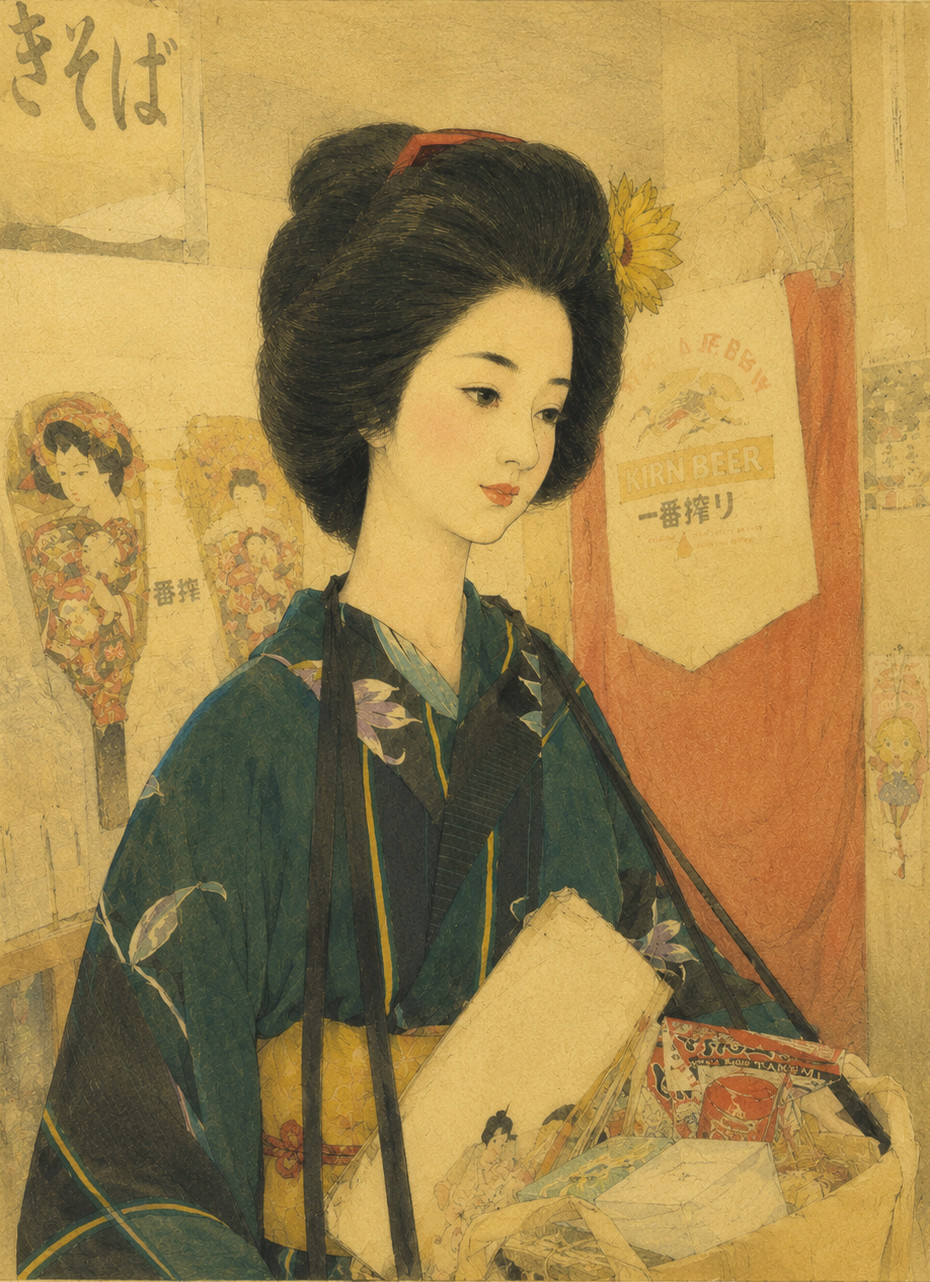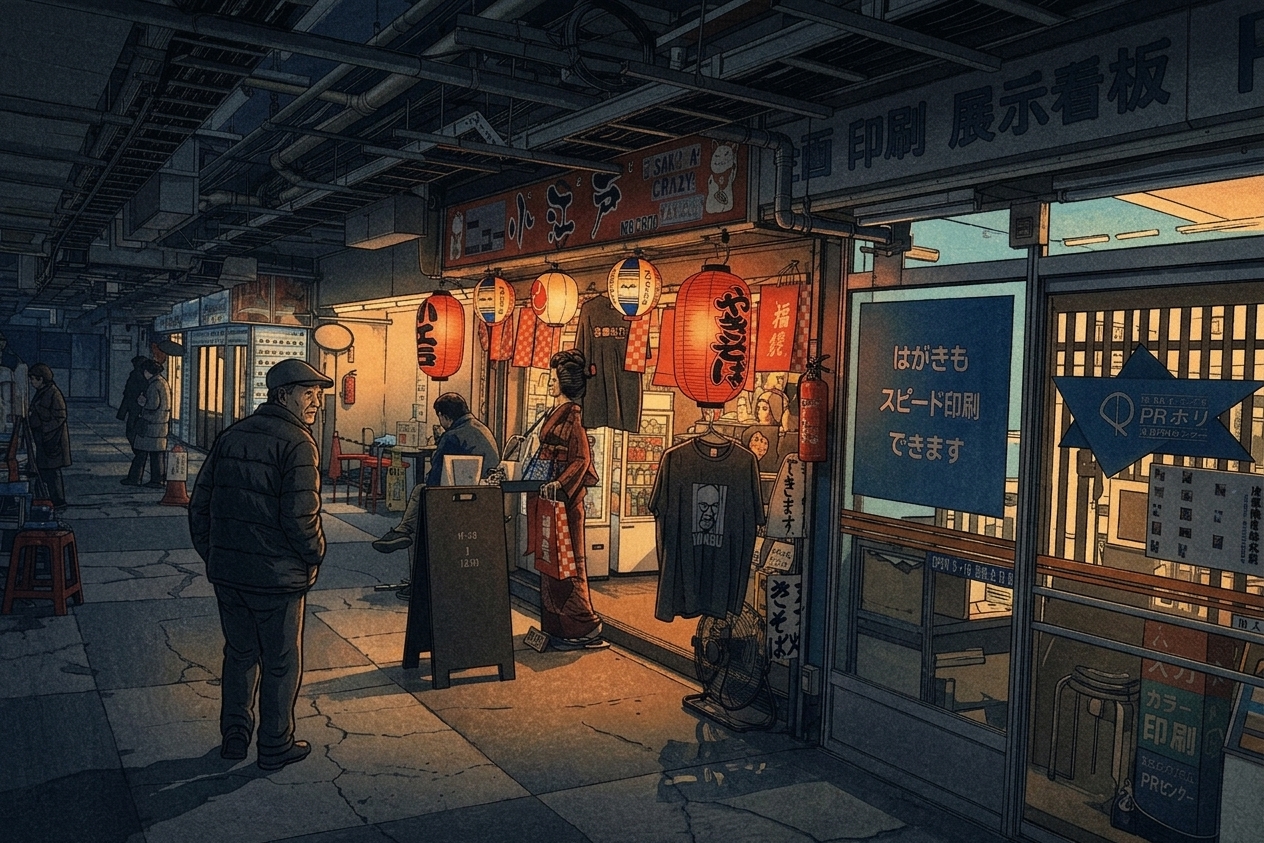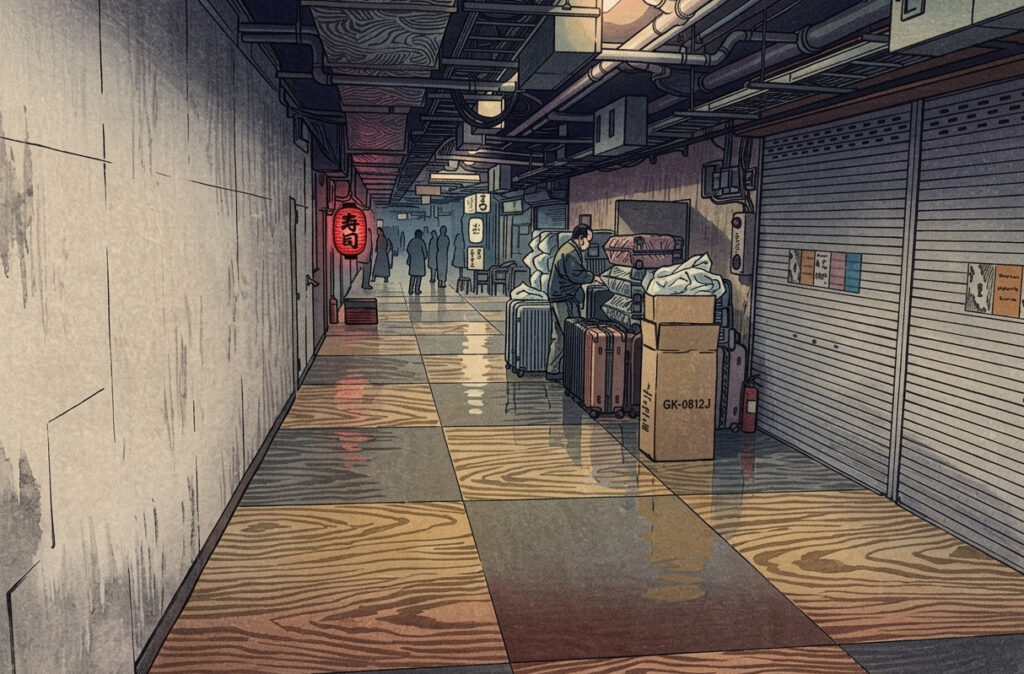
Eumenes 5: Bazaar of Babylon

Alexander the Great had entered Babylon, and Eumenes and Seleucus, finding themselves with time on their hands, decided to tour the city incognito. The next morning, Seleucus summoned his servant, intending to bring him along.

“Seleucus, why don’t we try going incognito, just like the King and Harpalus often do?”

“Here in Babylon? Are you sure that’s wise?”

“If we wrap turbans around our heads, throw on cloaks, and pretend to be nomads, no one will ever notice.”

Looking back now, after experiencing all sorts of ordeals off Peloponnese, Epirus, and Crete, I felt as though I had already become a full-fledged, globe-trotting adventurer.

“When I was young, my father told me that a leader of a warrior clan must always be accompanied by retainers whenever he leaves the house, maintaining an appearance fitting his family’s status.”

“My, aren’t you quite the nobleman? Why not taste a little freedom for once? Just like our King does.”


The Ishtar Gate, the northern gate of Babylon, was no ordinary gateway.

A pair of fortresses was built to flank the city walls extending from both sides of the gate, sandwiching them from the inside and outside. These fortresses formed the royal palace—the most impregnable citadel in all of Babylon.

Located at the center of these multi-layered fortifications, the Ishtar Gate was valued more for its ornamental beauty than its practical functionality. Covered entirely in tiles baked with a vibrant blue glaze, it was decorated with reliefs of various beasts, including bulls, horses, deer, and mushkhushshu. It almost appeared as though the multiple layers of fortresses existed solely to protect this exquisite gate.

Looking out from atop the Ishtar Gate, the Summer Palace could be seen to the north. It had likely been built originally in the middle of a wetland, on an islet in the Euphrates, to escape the summer heat; now, however, it formed the northern tip of the city, extending out like a promontory.

The grand avenue leading from the Ishtar Gate to the Summer Palace was an extension of the processional way that continued from the heart of the city, where Etemenanki and Esagila stood. It was originally built for the king to travel back and forth between the main palace and the summer residence, and the Ishtar Gate was meant to adorn this processional route. Outside the gate, this very processional way had transformed into the most bustling bazaar in Babylon.

A group that appeared to be Greek tourists passed by, led by a local guide. Since the guide was speaking in Greek, we quietly slipped into the crowd. According to the guide:

“This shrine, known as the New Year Temple, is not unique to Babylon; similar ones are built outside the city gates in Assur, Nineveh, and many other cities.

Since the days of Sumer, the beginning of the year—the New Year—has always been set on the vernal equinox. Here in Mesopotamia, barley is sown on the autumnal equinox and harvested on the vernal equinox. In Sumerian, the New Year festival is called Akitu, a word that originally meant ‘barley.’ The autumn Akitu marks the day when the Akitu seeds are sown, while the spring Akitu corresponds to the day the Akitu is harvested.

Furthermore, in Babylonia, Akitu also serves as the day Marduk conquered the barbarians—essentially, our national foundation day.”

“It seems this shrine is called the New Year Temple, Seleucus.”

“Yes, so it would appear, Eumenes.”

We decided to listen to the guide’s explanation for a little while longer.

“Beginning on the vernal equinox, Akitu lasts for twelve days.

On the first day, at Esagila—the temple of Marduk located south of the Ziggurat, a name meaning ‘temple whose top is high’ in Sumerian—the priest offers praise to the supreme god, Marduk.”

“O Bel, Lord of peerless wrath!
O Lord, compassionate King!
O Lord who rescued the gods throughout the world!
O Lord who overthrows the mighty with a single glance!
O Lord of glorious kings who share in your destiny!
O Lord, Babylon is your throne, Borsippa is your crown, and the vast heavens are your body!
In your arms you seize and crush powerful enemies; your eyes grant them forgiveness and mercy, until they come to extol your glory.
Lord of the Earth, Light of the myriad gods who adore you!
Who would not praise you?
Who would not speak of your greatness and acclaim your rule?
O Marduk, who resides in the heavenly sanctuary,
Lord who lifts up those fallen to the earth— Have mercy upon your city, Babylon!
Turn your eyes toward your temple, Esagila!
And grant freedom to the citizens of Babylon, whom you protect!”

“Then, the priests of Esagila place the statue of Marduk inside a portable shrine, carry it out of the temple, and temporarily enshrine it here in the New Year Temple, solely for the duration of Akitu.”

Realizing the explanation was likely to go on for some time, we quietly slipped away from the crowd of tourists.

From early morning until near noon, we walked back and forth along the bazaar between the Ishtar Gate and the Summer Palace multiple times, but we were unable to find the carpet-selling caravan from Aspadana. After all, caravans and carpet merchants were everywhere, making it impossible to pin down any specific stall. Even if the King or Laomedon had been there, if they were dressed like nomads just as we were, there would have been no way to tell them apart.

Along the Processional Way stood numerous stone statues of lions, mushkhushshu, and other creatures. There were also many show tents enclosed by curtains. They seemed to charge money to exhibit exotic, living beasts or rare curiosities like the pelts of wild animals. A sign painted with a snake likely indicated a snake charmer inside; if it was a lion, a lion was probably sleeping within. There was even a sign depicting a nude woman.

“Shall we go in, Seleucus?”

At my suggestion, he grimaced slightly. Ignoring his reaction, I handed a few small coins to the shopkeeper and stepped inside, with Seleucus following right behind me.

What awaited us inside the tent was not a woman of flesh and blood. It was a papier-mâché statue of a voluptuous nude female, painted in gaudy, vivid colors.

“What on earth is this?”

When I pointed at it, the shopkeeper simply said, “Ishtar.”

She wore an eight-pointed star upon her head, raised both hands holding a ring and a rod, had wings growing from her back, and possessed taloned feet. Beneath her feet crouched a pair of lions fused into a single body, serving as the goddess’s pedestal, flanked by a pair of owls on either side. Both lions kept their mouths shut, but the owl on the left had its beak open, while the one on the right had its beak closed.

“I suppose these owls are meant to look like doves, then.”

“Ishtar is the guardian deity of Venus, so this eight-pointed star might be a symbol representing the planet Venus. I hear that when a King of Babylon accedes to the throne, he marries this goddess,” Seleucus said, once again showing off his hastily acquired knowledge.

“So that would be the sacred coronation rite. In that case, now that our Macedonian king is the master of Babylon, I wonder if he, too, has held a sacred marriage with Ishtar—the goddess who has protected this land since the days of Sumer?”

“Who can say?”


Stepping out of the show tent, we browsed around for anything that might catch our eye, when I spotted a street vendor who had laid out a carpet on the ground and was selling rings. Seeing rings inevitably reminded me of Harpalus. Naturally, Harpalus would never be selling rings in a place like this, but curious about what kind of person was running the stall, I peeked at the vendor’s face. It was sunburnt brown and deeply lined with wrinkles.

“Marduk?”

Saying so, the vendor held out a bronze ring. Apparently, the bearded man engraved on the ring was supposed to depict Marduk. I shook my head.

“Mushkhushshu?”

This time, he offered a gold ring. Through gestures and hand movements, the vendor seemed to explain that it had the head of a serpent, the upper body of a lion, the lower body of an eagle, and the tail of a scorpion.

Now, this was interesting. It was just like the relief I had seen on the Ishtar Gate earlier. I found myself wanting it a bit.

The vendor spread out all ten fingers and said, “Daric.” It seemed he meant ten darics. What a surprise—he was asking for quite an exorbitant price! If it were solid gold and possessed antique value, that price might have been plausible. But there was no way such a costly treasure was being sold by the roadside like this. It was surely just plated.

The vendor pulled one hand back, leaving only one extended. It seemed he had suddenly slashed the price in half.

I held up a single finger. One daric equaled twenty-five drachmas. Even if I were tricked into buying a fake, that was an amount I could live with losing.

The vendor folded one finger on his hand, now showing four fingers.

“What do you think? He says four darics for this ring.”

“I wonder. If you like it, why not just buy it?”

“My dear fellow, four darics means one hundred drachmas—one hundred drachmas! A man can eat three meals a day—breakfast, lunch, and dinner—and stay overnight at an inn for exactly one drachma. In other words, with four darics, you could live for a hundred days!”

“I am accompanied by a hundred retainers. That means it costs me one hundred drachmas a day. From now on, following the King of Macedonia, I’ll have to spend one hundred drachmas every single day for years to come. One hundred drachmas is hardly a significant sum,” Seleucus declared with complete composure.

Well, played, I thought, feeling a little put in my place by his response.

One hundred drachmas. To be sure, for me at present, it was by no means an impossible sum to spare.

I held up two fingers.

The vendor smiled warmly. Deal made.

I pulled two golden daric coins from my leather pouch. The vendor placed the Mushkhushshu ring into a small gift box, tied a ribbon around it, and as he handed it to me, he gave a smirkish grin and nudged my ribs with his elbow.

It seemed he didn’t think I was buying it for myself. He evidently assumed I was buying this ring as a present for some woman I had my heart set on. No doubt many men bought rings for precisely that purpose. I tossed the small box into my leather pouch.


“This is getting us nowhere. Shall we head back?”

Just as the two of us had grown tired of sightseeing and shopping, and decided to give up and return to the Macedonian quarters, a group of shabbily dressed children blocked our path, stretching out their hands to beg.

“I’ve heard that in moments like this, if you give in to pity and offer them a small handout, they’ll pester you endlessly. Let’s ignore them,” I told Seleucus, attempting to walk away quickly. But for some reason, more and more of the beggar children’s companions gathered, eventually surrounding us.

Some even grabbed at my sleeves or reached for my leather pouch. The passersby around us either turned a blind eye or simply watched with smirks on their faces.

“Insolent scoundrels! I’ll cut you down!” Seleucus reached for the sword at his waist.

Suddenly, the weight of the strap supporting the leather pouch slung across my shoulder vanished. A strap doesn’t just snap on its own—someone had sliced through it with a blade.

“Thief! Catch him!”

Turning around, I saw a child clutching my leather pouch, darting away into the bustling crowd. I shoved my way through the throng, trying to give chase.

However, catching up seemed all but impossible. The crowd was blocking my way! What had I kept in that leather pouch, anyway? Ah, right—around twenty darics. And that Mushkhushshu ring I had just bought was stolen too! So that was it; they must have marked me as a target back at the stall.

There’s no helping it, I suppose I must give up.

Just as I thought that, the child I was pursuing stopped running and began writhing in pain. Someone was twisting his arm behind him. The young thief was easily pinned to the ground, grinding his teeth and foaming at the mouth.

Judging by his attire, the man detaining the child was clearly a warrior—perhaps one of the guards from the Ishtar Gate. I approached to express my gratitude, only to be astonished when I caught sight of his face.

“Word reached us that a pair of country bumpkins was waddling around the northern gate bazaar today.”

“You’re… Laomedon! Laomedon, isn’t it?”

“What do you want to do with this one?”

Looking down at the child Laomedon was holding to the ground, he was still quite young—hardly more than ten years old.

“Under local law, what is the penalty for his crime?”

“Take a look. He used this knife to cut the strap of your baggage and steal it. That violates Article 22 of the Code of Hammurabi: ‘If anyone uses a weapon to plunder another’s goods and is captured, he shall be put to death.’ Even if we execute him right here and now, not a single citizen will object.”

“The Code of Hammurabi? Hammurabi was the founder of Babylon, wasn’t he? That was roughly fifteen hundred years ago. Is a law established that far in the past still in effect?”

“It certainly is. Inscribed in cuneiform upon baked brick, embedded right into the wall of Esagila. It is Babylon’s fundamental code of law.”

“With a history that long, the law carries immense weight.”

“Indeed. A law that is reasonable and cherished by the people will endure for a thousand or even two thousand years. Hammurabi has returned to dust, but the code he compiled remains, baked into brick. So, what will it be for this boy? Whether he lives or dies is up to you.”

“No… this was the result of my own carelessness.”

I opened the recovered pouch. The gold coins and the ring were all still inside.

“Blast it. Rings are meant to be worn on fingers after all.”

I took the Mushkhushshu ring out of the small box and slipped it onto my left ring finger.

“Let him go.”

When I said that, Laomedon confiscated the knife the child was carrying and casually released him. The boy instantly sprinted off, melting into the bustling crowd.

“Did you two really waltz into a hive of villains like this looking like completely clueless tourists? Nobody around here wears a pointed straw hat like that.”

“I was actually thinking of buying a turban to wrap around my head after this.”

“Too late for that. That’s the very first thing you should’ve done.”

“Do those children commit theft like that knowing they’ll be killed if caught?”

“Around here, assault and murder are daily occurrences. Getting caught by the authorities and executed is just a tiny fraction of it. Every single day, they’re living right on the knife-edge between life and death.”

“By the way, who told you we were coming? Was it Mazdaya?”

Laomedon gave a quiet chuckle. “Don’t go asking what you already know.”

“Weren’t you and the King acting as carpet merchants? Weren’t you supposed to come to this market today to stock up on carpets?”

Laomedon laughed and gave my shoulder a friendly slap. “Sounds like you’ve got a mountain of questions for me. I’ll tell you whatever I’m allowed to share. Standing around talking in a crowd like this is no good, though—why don’t you come over to the guardhouse? I’ll treat you to lunch. And who might your companion be? Looks like a Macedonian lad. Is he your page?”

“He’s no page,” I said, a bit flustered. “If anything, I’m the one who ought to be serving him.”

“Pleased to meet you. I am Seleucus, son of Antiochus. I arrived from Orestis six months ago.”

Seleucus stepped forward and introduced himself on his own initiative.

“Well met. I’m Laomedon—I suppose you could call me the King’s interpreter, slash general shopkeeper.”