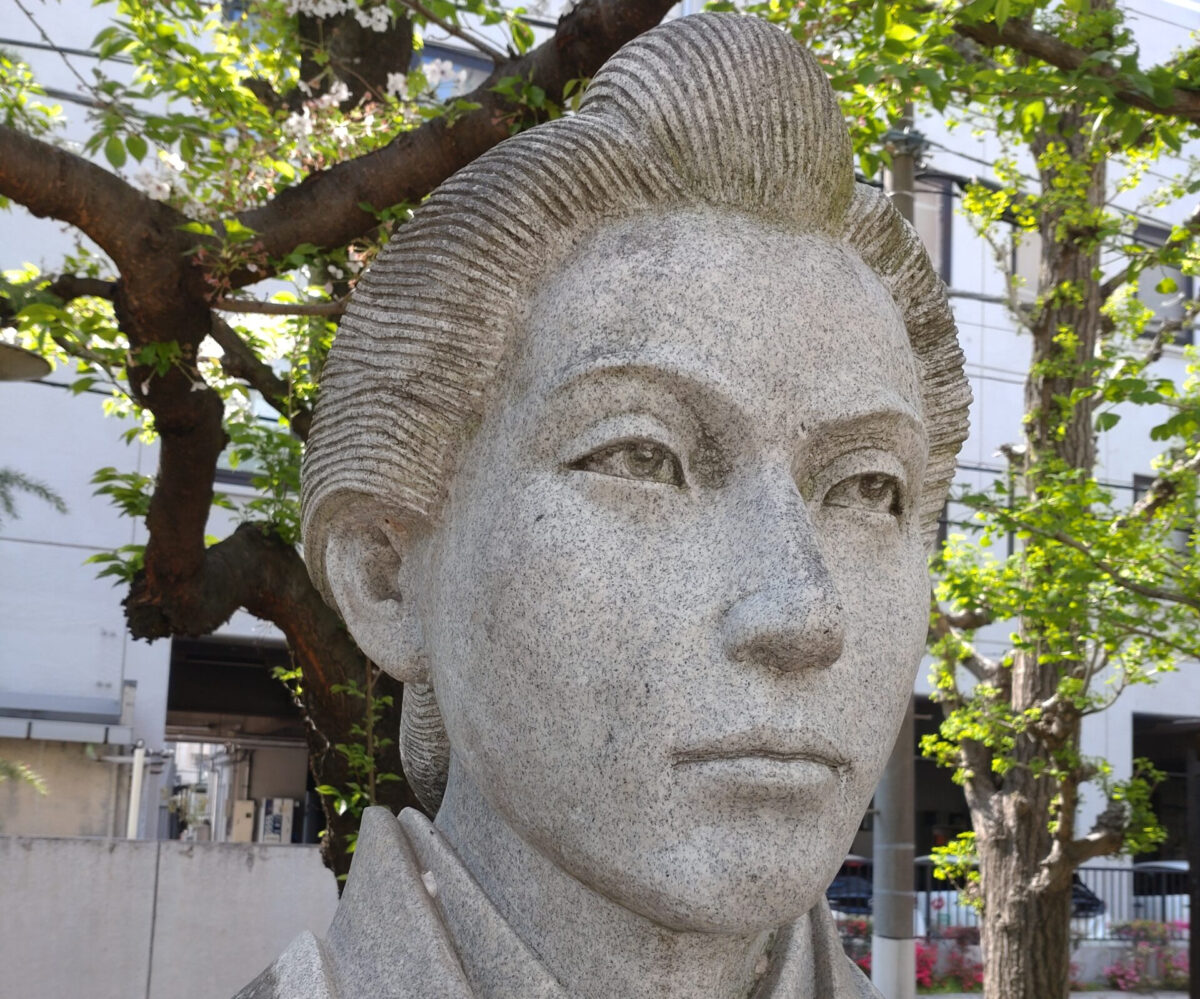
In 1893, at the age of 22, Ichiyo Higuchi moved into a tenement house in Shitaya Ryusenji-cho and opened a candy store to make a living. Once, there was a temple called Ryusenji (竜泉寺) located just west of the Yoshiwara pleasure quarter, but it was relocated, and another temple named Daionji (大音寺) was built in its place during the Meiji period. This entire area between Yoshiwara and Daionji was known at the time as “Daionji-mae” (In Front of Daionji), as referenced in her novella Takekurabe (Growing Up): “Though the name ‘In Front of Daionji’ smells of Buddhism…” Today, this area is located close to Minowa Station on the Hibiya Line and has transformed into an upscale residential district and a neighborhood of high-rise buildings.
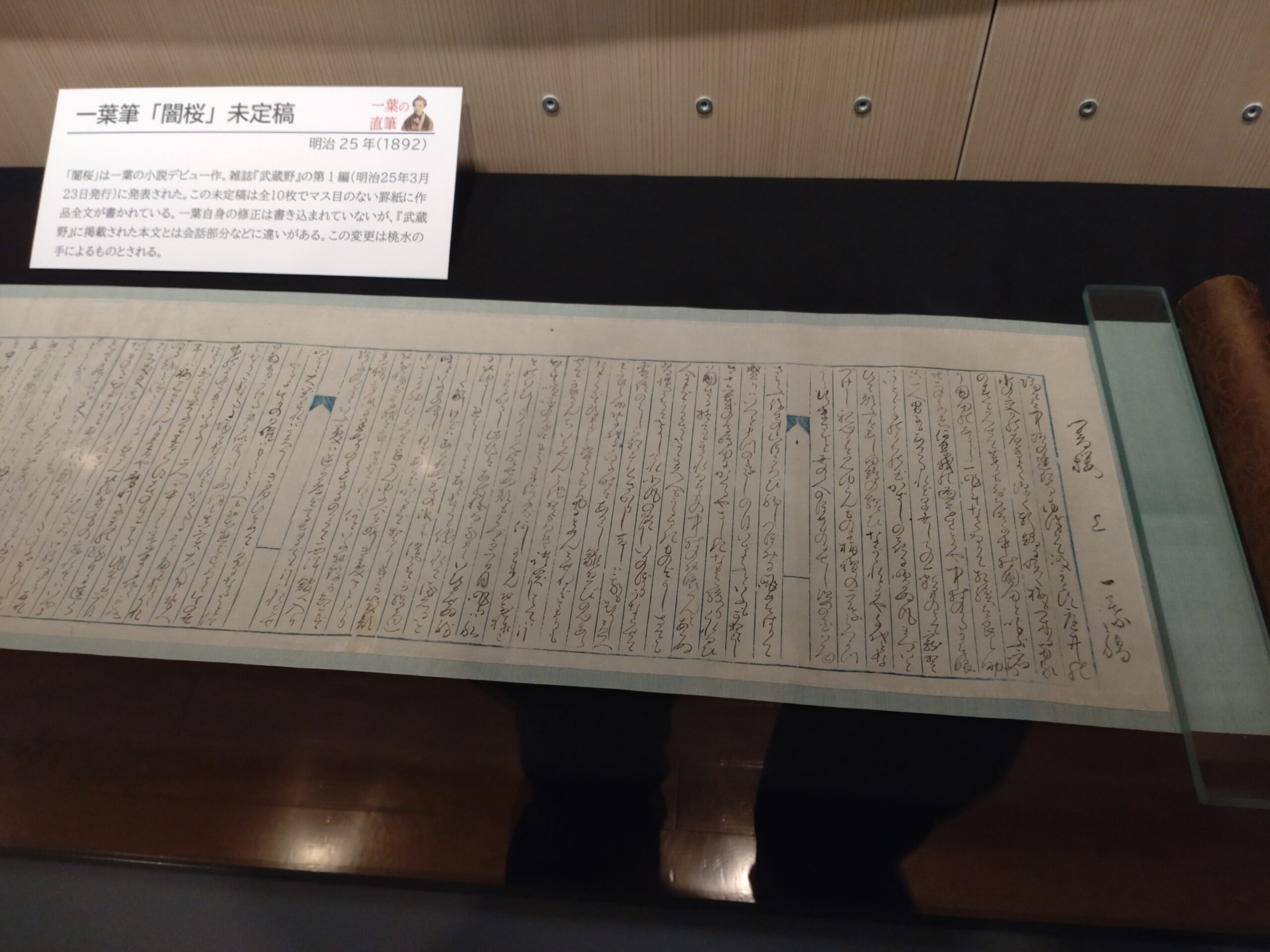
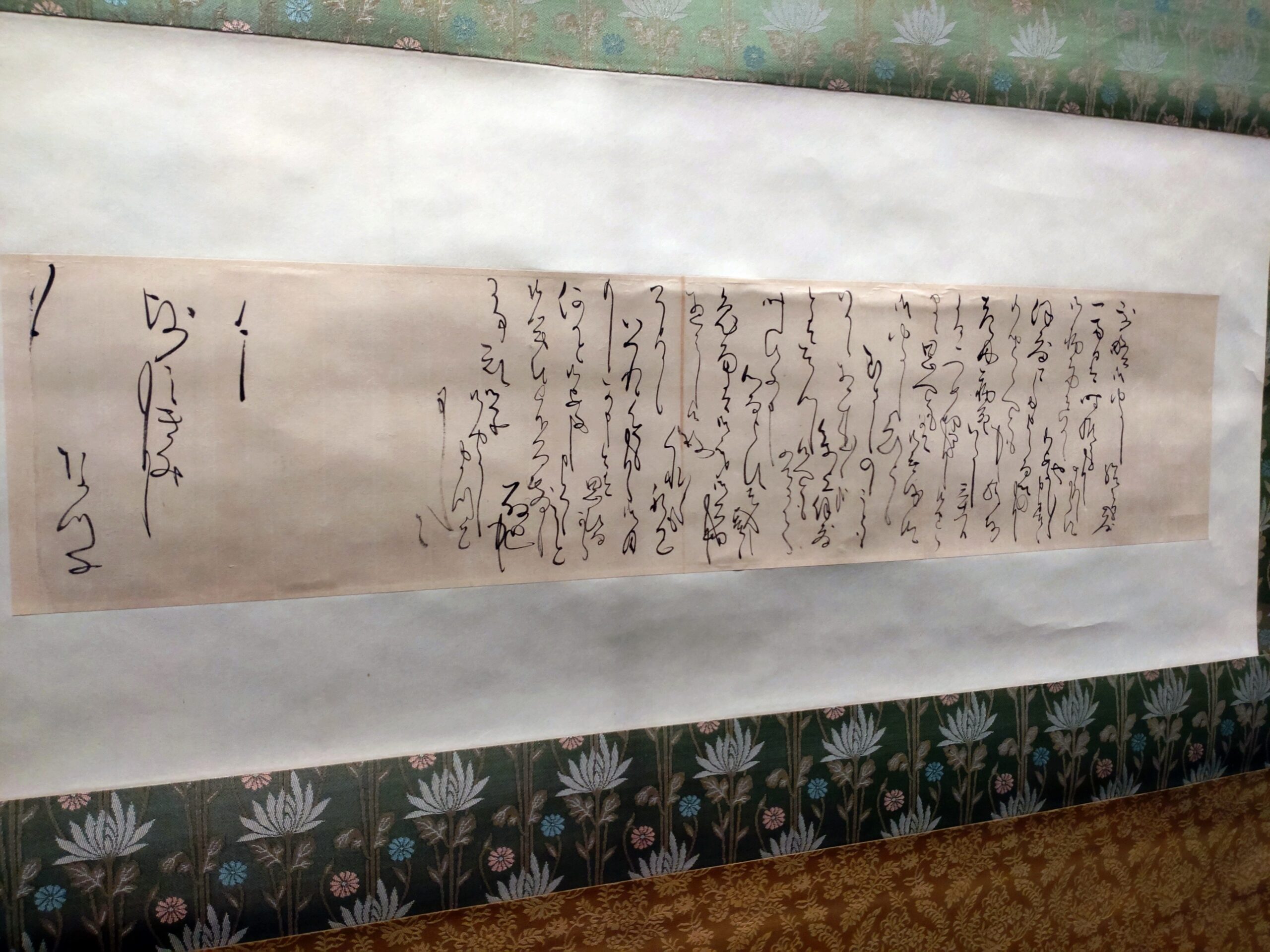
As she began “mingling with the dust of the world,” Ichiyo started keeping a diary titled Amidst the Dust (Chiri no Naka). Her entry stating, “This house sits on the single straight road leading from Shitaya to Yoshiwara,” likely refers to Chayamachi-dori Street, which ran east from Mishima Shrine in Shitaya, passed right in front of her shop, and met Ageya-cho on the northern edge of Yoshiwara. She described the bustling atmosphere: “From evening, the roaring sound of rickshaws and the flashes of crisscrossing lamplights are beyond description. The rickshaws heading there do not cease until one in the morning, and those returning begin to rumble as early as three in the morning.”
She also noted, “Since the house is a tenement, rickshaw pullers seem to live just on the other side of a single wall.” And added, “How often must a household without men be looked down upon, causing so much resentment.” Having lost her father, Ichiyo was left to live with just her mother and younger sister—three women alone. With rough rickshaw pullers living on both sides, separated only by a thin wall, she must have felt incredibly vulnerable.
Her descriptions painted a harsh picture of her surroundings: “It is a place with exceedingly many mosquitoes; huge ones called bush-mosquitoes begin to buzz from dusk, to a terrifying degree.” She also wrote, “The well provides good water, but it is deep,” and lamented, “Vanishing without a trace, I am mingling in this strange dust.”
Looking at Ichiyo Higuchi’s diaries and poems from this period, one is suddenly surprised to find verses that could easily be mistaken for Edo kyoka (satirical poems):
Like a crab that can only crawl sideways through the world, my heart desires to dwell in pure water. (Crab)
世の中を 横にのみ這ふ 蟹ながら 心は清き 水にこそ棲め (蟹)
yononaka wo yoko ni nomi hafu kani nagara kokoro fa kiyoki midu ni koso sume

Even if I were to become a bear with a crescent-moon mark, I would never want to learn the black-hearted ways of the people of this world. (Bear)
月の輪の 熊となるとも 世の人の 腹黒きには 習はざらなむ (熊)
tukinowa no kuma to naru tomo yo no fito no faraguroki nifa narafazaranamu

The plum blossoms blooming by the sacred fence of the mighty gods—even their fragrance, alas, has mingled with this world of dust. (Plum Blossoms by a Shrine)
ちはやぶる 神の斎垣に 咲く梅も 香は塵の世に 混じりけるかな (社頭梅)
tifayaburu kami no igaki ni saku ume mo ka fa tiri no yo ni maziri keru kana
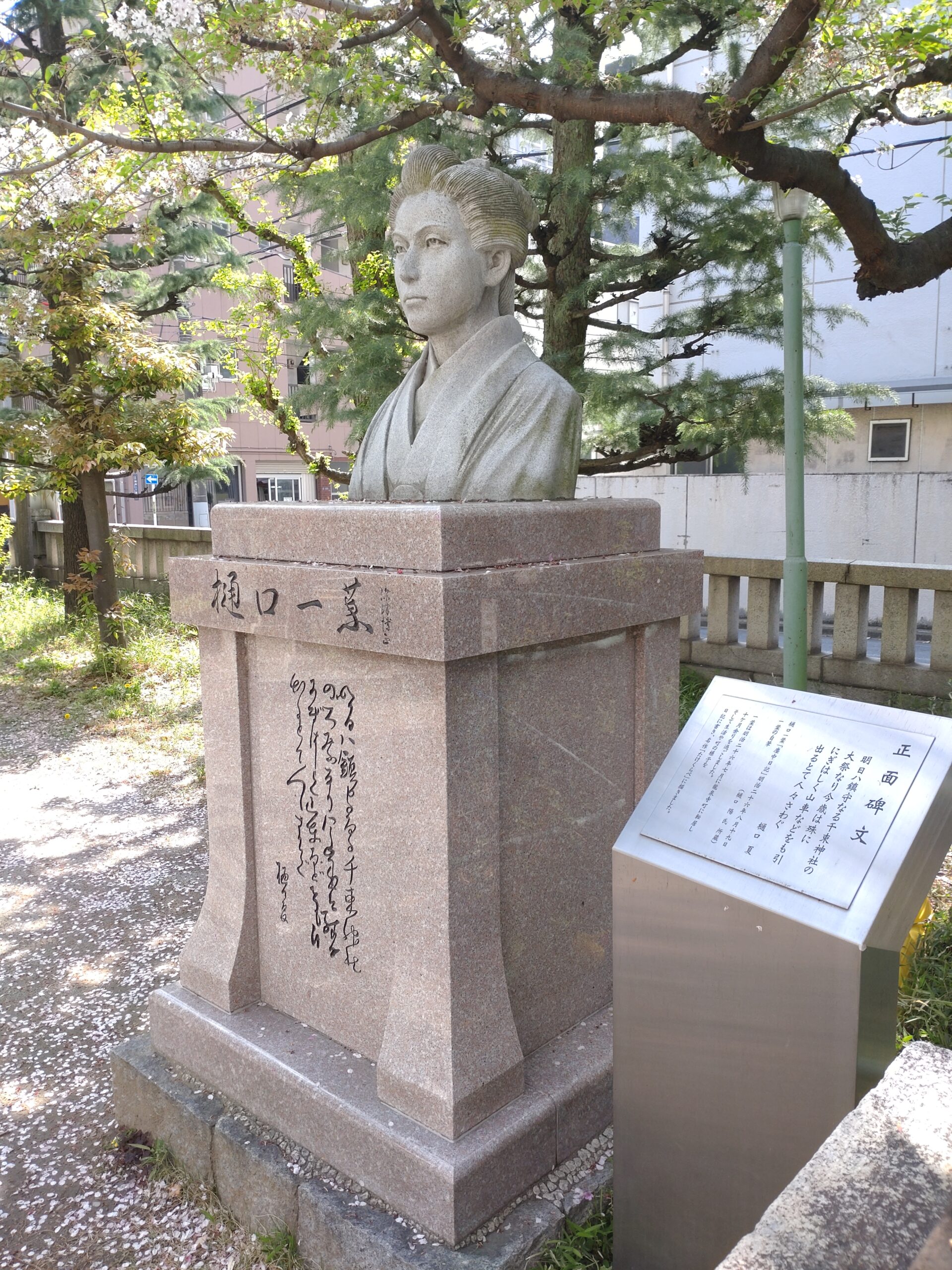
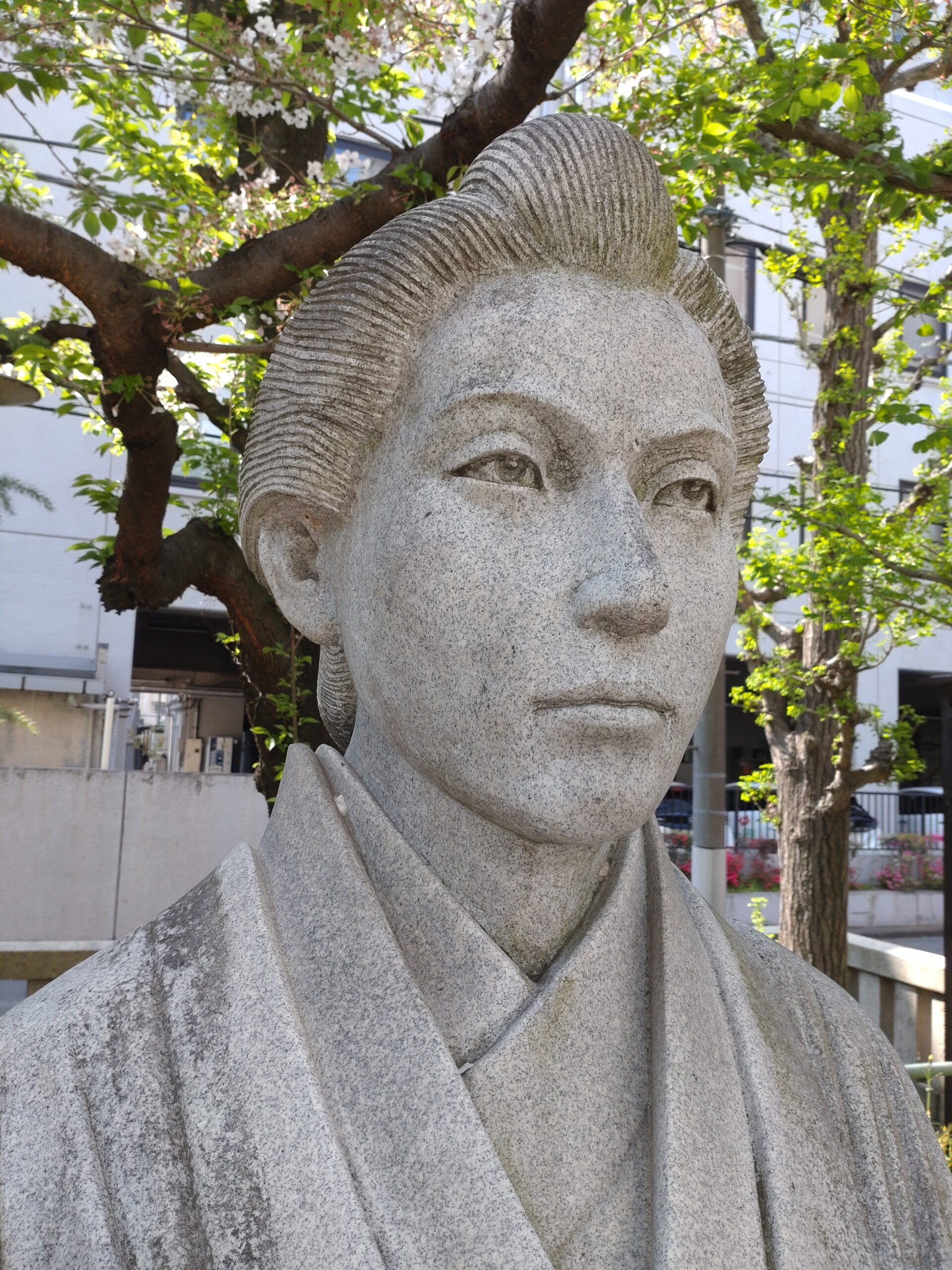
It is startling to see such poems appear so unexpectedly. One wonders if the shrine with the blooming plum blossoms and the sacred fence was Mishima Shrine (Mishima-sama), which appears in Takekurabe; Senzoku Shrine (Senzoku Inari Shrine, where a bust of Ichiyo now stands); or perhaps Otori Shrine (Ootori-jinja / Otori Shrine).
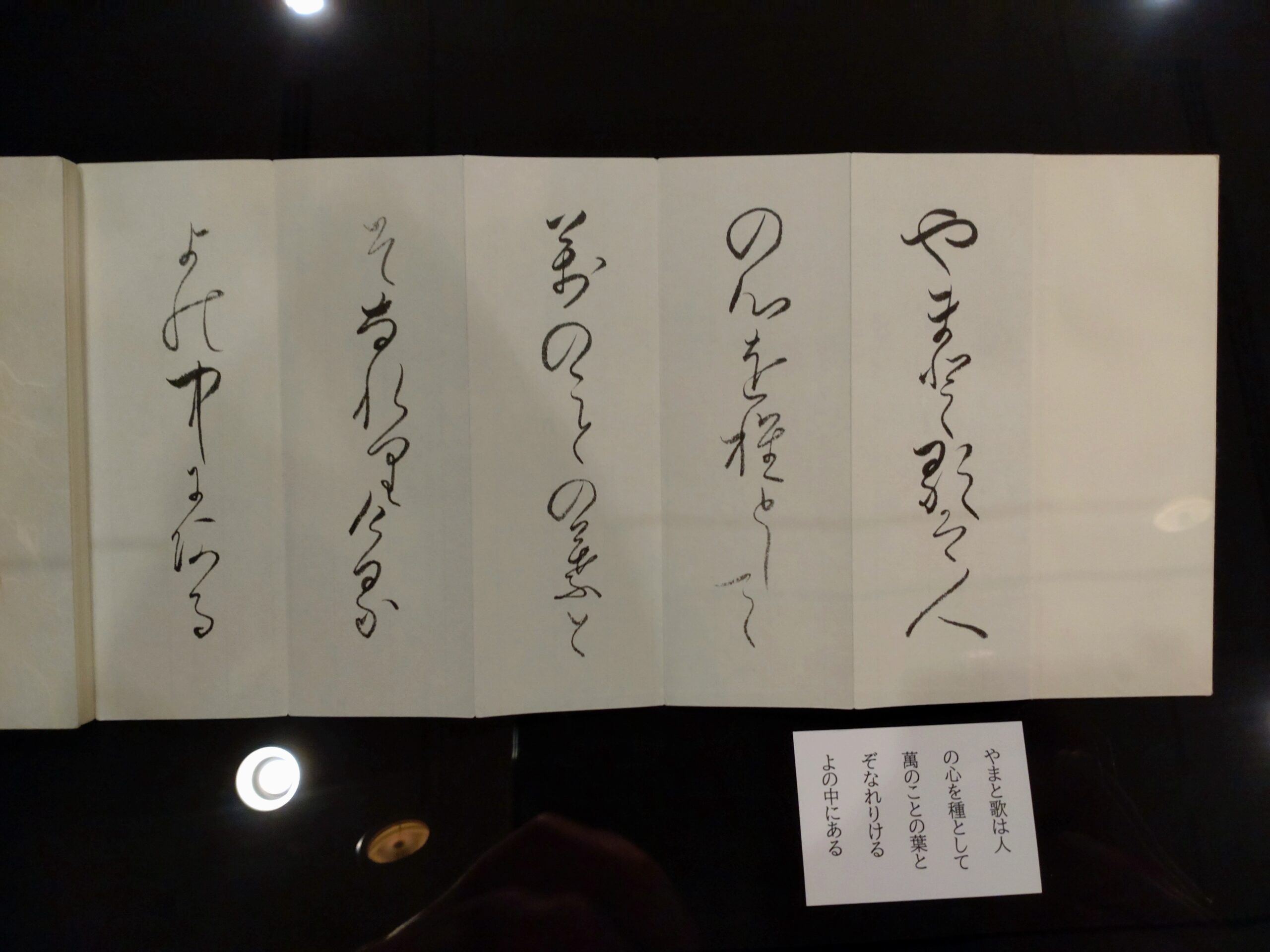
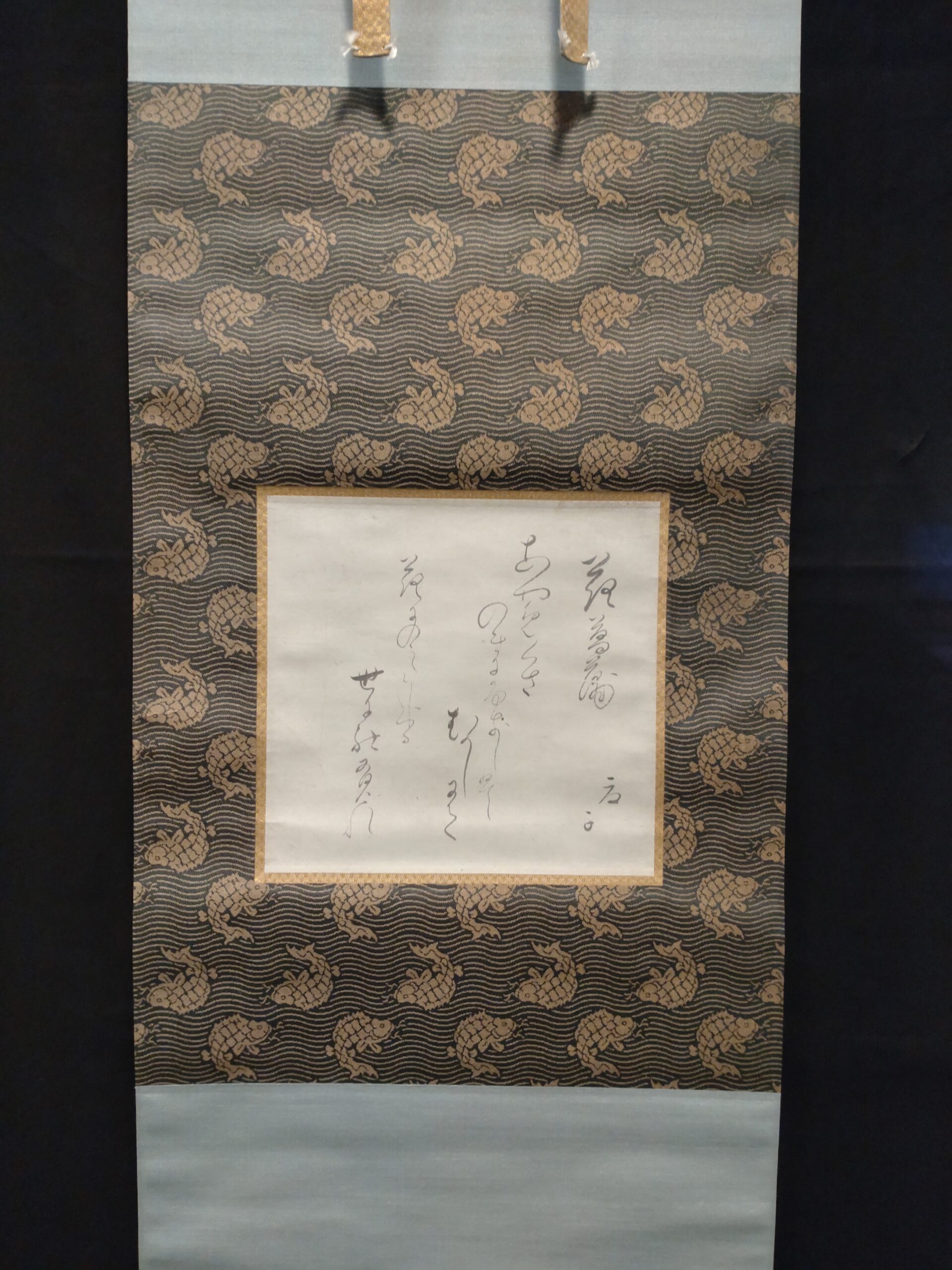
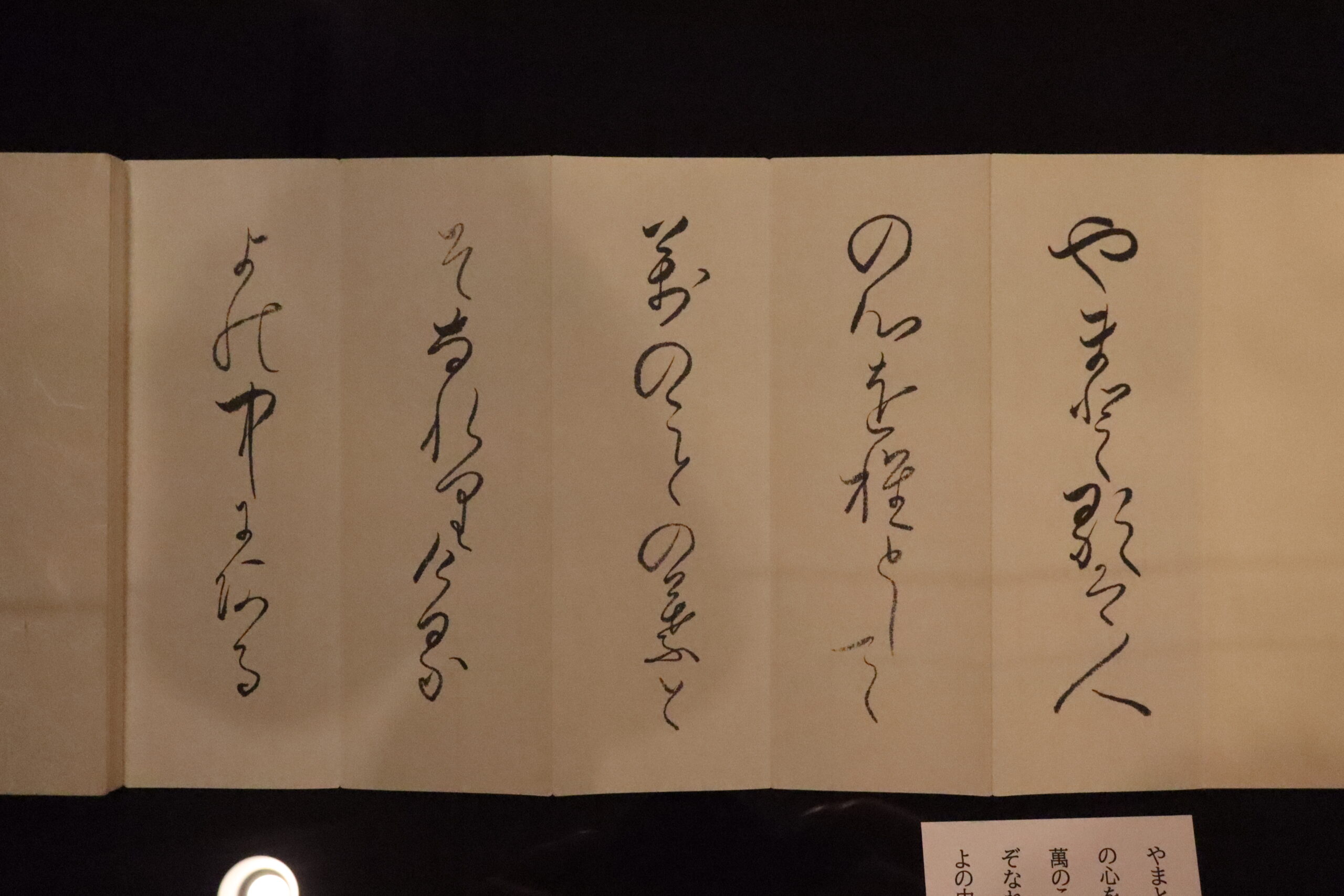
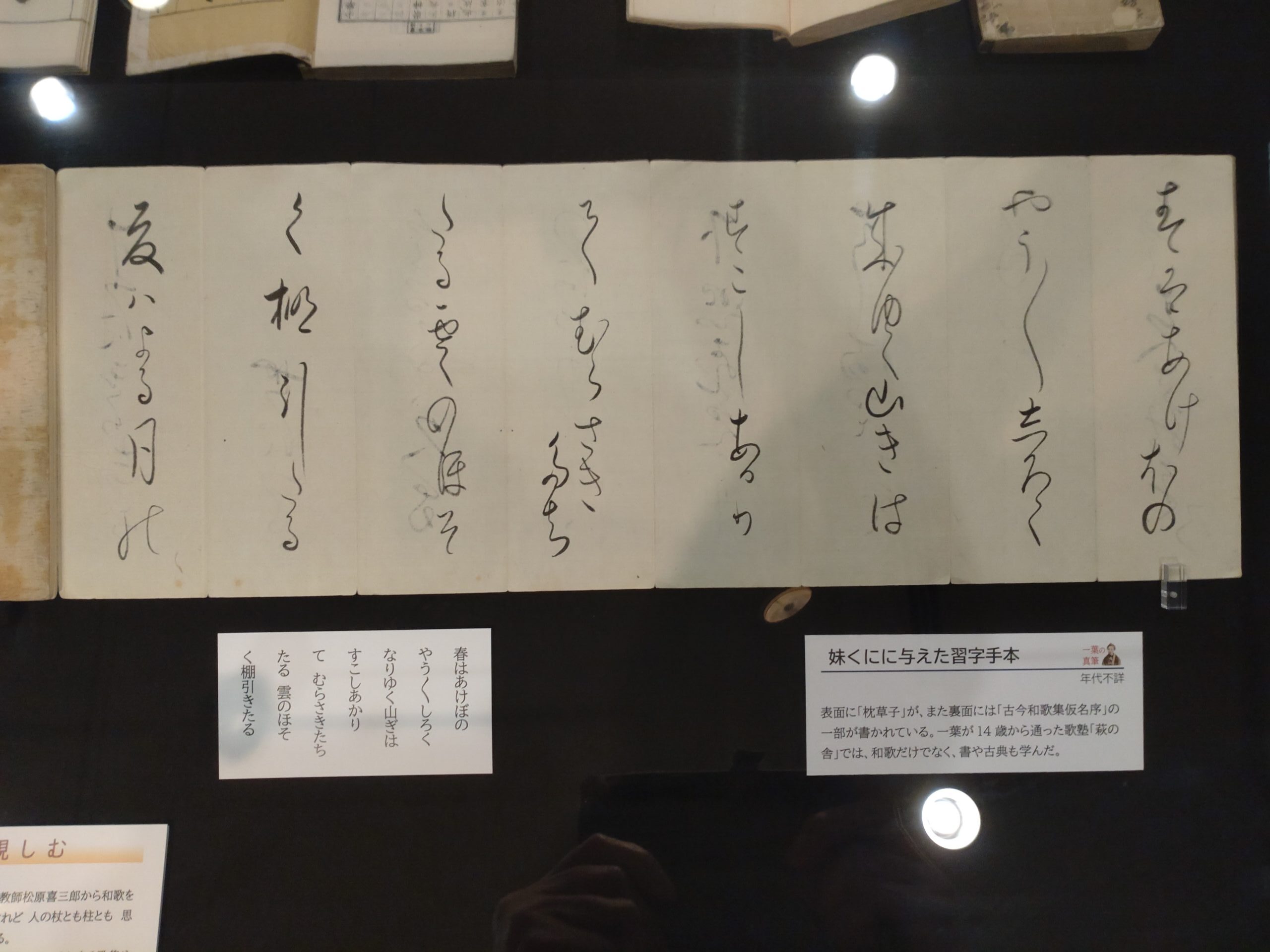
When visiting the Ichiyo Memorial Museum, one is struck by how incredibly beautiful her calligraphy was. She frequently ghostwrote love letters on behalf of the courtesans, even interlacing them with love poems she had composed herself.
The dew on the lotus leaf, tumbling and blending—if by some rare chance it should ever stain with true feeling, would it hold any real color?
まろびあふ はちすの露の たまさかは 誠に染まる 色もありつや
marobi afu hatisu no tuyu no tamasaka fa makoto ni somaru iro mo ari tu ya
Gently shaking a lotus leaf with your hand, you watch the dewdrops roll around on it, merging into one, splitting into two, and then fusing together again. This is the magic of water’s surface tension. At the same time, it looks just like a couple flirting and dallying with one another. The color of dew is always clear and transparent; both the woman and the man are merely playing a game. Yet, does that dew ever, by some miracle, stain with the color of true sincerity? Out of a hundred couples, did even one ever fall in love for real? One cannot help but marvel at Ichiyo’s terrifying brilliance in capturing all of this within just thirty-one syllables.
Today, she is famous primarily as a novelist. However, it must be emphasized that her truest, most remarkable talent lay in waka poetry, and that she was also a calligrapher of the absolute highest order.